What happens when your business grows faster than your people foundations?
For many founders and leaders of small and medium-sized businesses, HR starts as something you’ll “deal with later”. Not because you don’t care, but because you’re busy building, selling, hiring and delivering.
The problem? “Later” quietly becomes expensive. It shows up as:
- Time spent second-guessing people decisions
- Inconsistent processes
- Awkward performance conversations avoided
- Employees unclear on expectations or growth
- Good people leaving because no one was recognising their efforts
At Purple Playground, we believe HR should give you more capacity, not more admin. We help growing businesses systemise their HR planning, humanise the experience, and build practical people strategies that support sustainable growth.
Let’s look at what that shift really involves.
The Hidden Cost of “Dealing With It Later”
When HR is mostly reactive, the cost isn’t always obvious, but it’s constant.
- Founders and leaders spend hours each week thinking about people issues instead of the business
- Managers feel unsure how to handle performance or difficult conversations
- Roles and responsibilities blur as the business grows
- Compliance gaps are only addressed once something goes wrong
Over time, this leads to slower growth, higher turnover, increased risk and a lot of unnecessary stress.
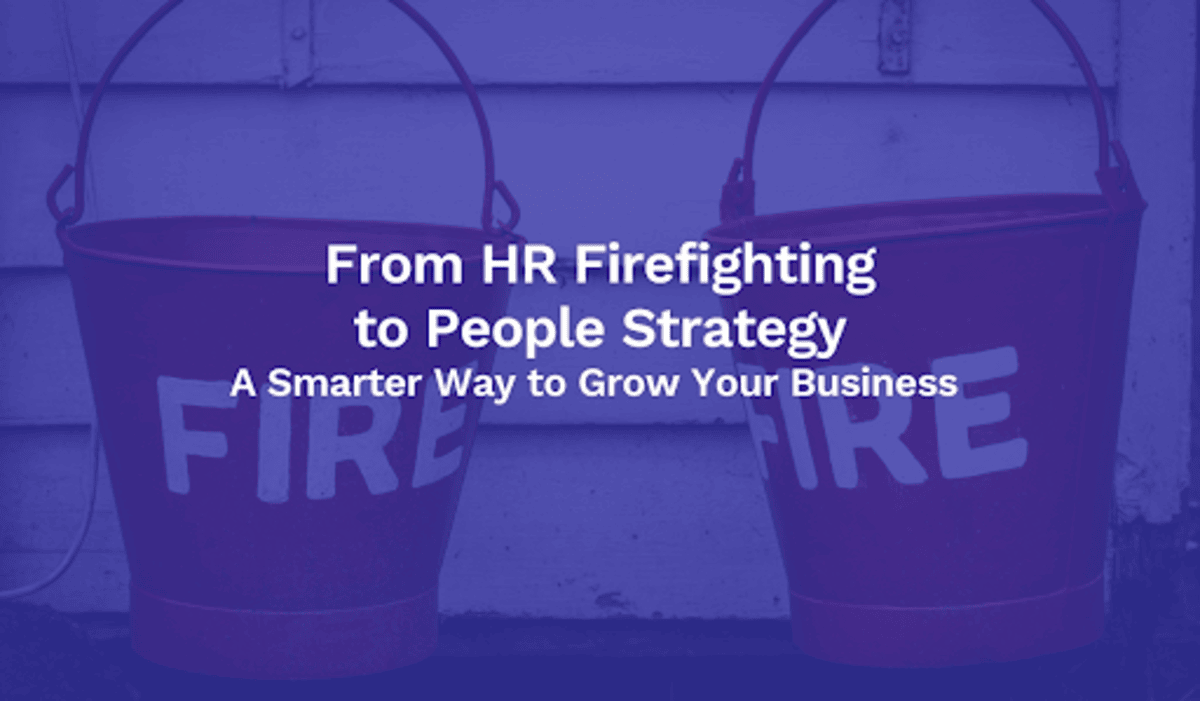
A proactive people strategy doesn’t remove every challenge. But it dramatically reduces the number of fires and gives you clearer, more confident decision-making.
Where Does Your Business Sit on the HR Maturity Journey?
Rather than a fixed framework, HR maturity works better as a self-check: consider how consistently your business manages its people, how decisions are made and whether HR is keeping pace with growth or reacting after the fact.
Most organisations will recognise elements of all three stages, but one will usually feel more dominant depending on where the business is right now.
Stage 1: Reactive
HR is largely administrative and issue-driven. Leaders respond to problems as they arise, with limited consistency or documented processes.
Stage 2: Proactive
Core HR processes are established. Leaders have clearer guidance, managers are better supported and people practices become more consistent across the business.
Stage 3: Strategic
HR becomes an enabler of business growth. People practices support leadership capability, workforce planning and long-term business objectives rather than simply responding to day-to-day issues.
Systemise The Process. Humanise The Experience.
At Purple Playground, we often talk about Systemising the Process. Humanising the Experience. Strong people practices don’t come from adding unnecessary bureaucracy. They come from creating practical systems that help leaders support their people consistently while leaving room for genuine human-centred conversations.
Systems support good HR, but they work best when they’re built around processes and practical leadership rather than becoming the strategy themselves.
Why Planning Ahead Creates Better People Outcomes
One of the key differences between reactive and strategic HR is planning. Businesses that are constantly putting out fires often find themselves making hiring, performance and workforce decisions under pressure, with little space to step back and think about the bigger picture.
An effective HR planning process helps businesses anticipate future needs rather than simply responding to immediate challenges. This might include:
- Identifying future leadership capability
- Preparing for growth
- Strengthening onboarding
- Clarifying career pathways
- Ensuring managers have the tools they need to support their teams
Planning isn’t about adding more processes for the sake of it. It’s about giving teams a clearer way to make decisions while still staying flexible enough to adapt as priorities shift. This is where the right level of HR support can make a meaningful difference.
For growing organisations, this more proactive approach helps reduce disruption, strengthens leadership capability and creates the foundations needed to scale with confidence. Instead of reacting to each new challenge as it arises, businesses can focus on building a workplace where both people and performance grow together.
From Compliance To Strategy: Our 5 Ps Framework
At Purple Playground, our 5 Ps framework helps growing businesses build practical, scalable people strategies aligned to their commercial goals:
- People – People are more than their measurable skills. Value emotional intelligence, culture-add (not just culture-fit), and behavioural competencies. Celebrate the diversity of thought and experience each individual brings to your team.
- Purpose – Purpose isn’t just feel-good messaging. Aligning employees’ and the organisation’s purpose boosts engagement, sparks discretionary effort, and drives stronger business outcomes.
- Performance – Harness the intrinsic motivation of a purpose-led team. Use Objective Key Results (OKRs) to link company, team, and personal goals to measurable results, creating a high-performance culture.
- Profit – With the right people, aligned purpose, and heightened discretionary effort, you’ll achieve higher productivity, lower people-related costs and increased profits.
- Positive Impact – Lead with purpose. Make decisions that go beyond profit to create meaningful change, for your team, clients/customers and community whilst leaving a lasting personal and business legacy.
Compliance provides an important foundation. From there, strong people practices help businesses build leadership capability, improve consistency and support sustainable growth over time.
Proactive HR = Fewer Fires and Better Decisions
Compliance helps reduce risk. A proactive people strategy helps build the consistency, capability and confidence needed to support sustainable business growth.
When your foundations are solid:
- Leaders feel more confident
- Teams know what’s expected
- Issues are addressed earlier
- Growth becomes more predictable
Whether HR capability is built internally, outsourced or through a co-sourced model, the goal is the same: creating people practices that support where your business is heading rather than simply responding to today’s challenges.
Start Small. Compound Often.
You don’t need to overhaul everything at once.
Start with a few practical questions:
- Are your key roles aligned with where the business is going?
- Do your people understand what success looks like?
- Are your current people processes supporting your team or creating unnecessary friction?
Small, intentional improvements to your people practices can create meaningful long-term value as your business grows.
If your business is moving beyond reactive people management, we’d be happy to help you identify the next practical steps. Through practical HR consulting for small businesses, we help business owners build stronger people foundations, support their leaders and prepare for sustainable growth.